
How Far Can You Drive on a Flat Tire
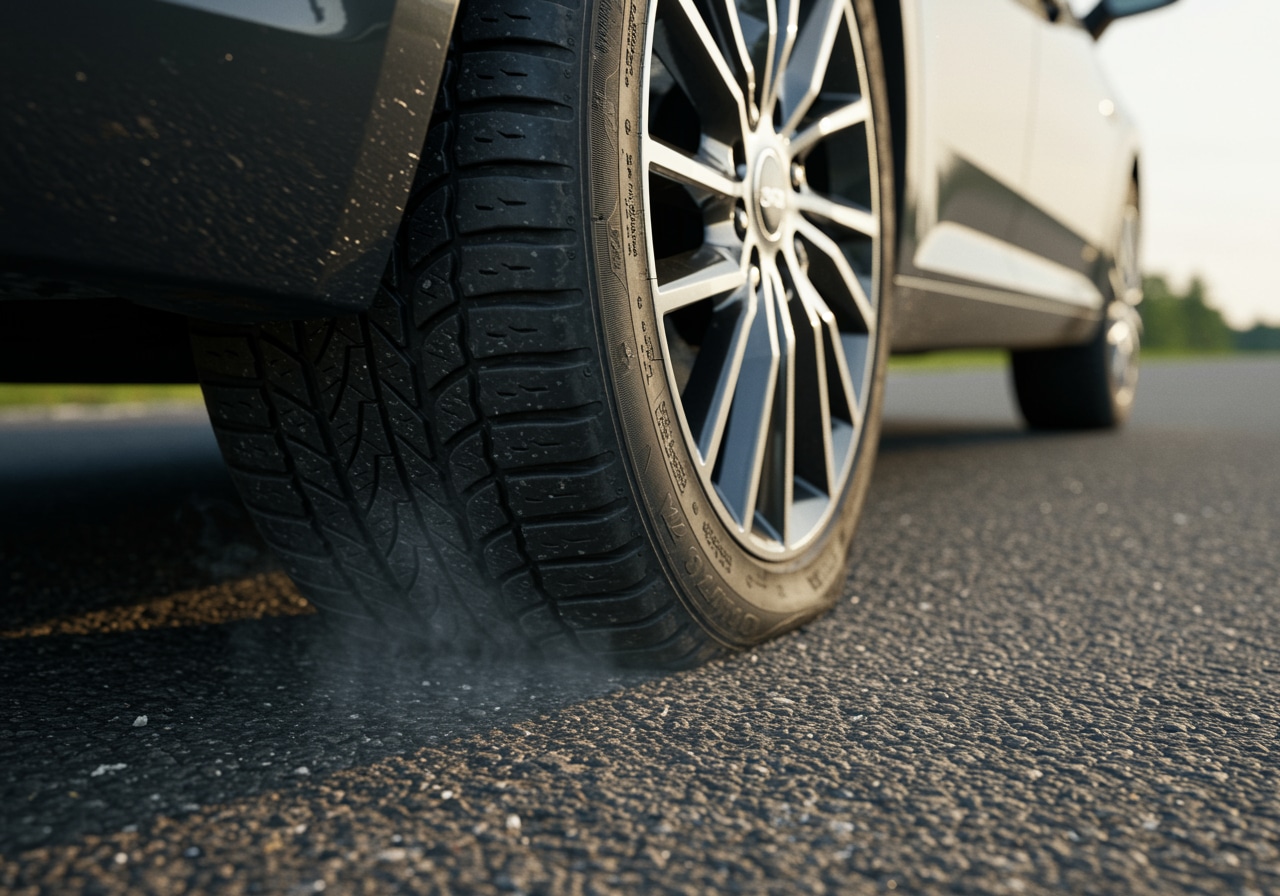
Flat Tire
Safety.
How far can you drive on a flat tire? The short answer is zero miles safely. Driving on a completely flat tire is extremely dangerous and can cause thousands in damage within yards. Understanding proper emergency response protects your vehicle and ensures your safety on Houston’s busy highways.
Miles Safe
Emergency Service
Safety Focus
How Far Can You Drive on a Flat Tire?
The safest answer is zero miles. Driving on a completely flat tire is never recommended and can cause severe damage to your wheel, suspension, brakes, and vehicle body within just 100 yards. The risks far outweigh any convenience of reaching your destination.
At Race Track Auto Center in the Westchase District, our ASE-certified technicians provide professional emergency tire guidance for Houston drivers. Located at 9840 Westpark Dr, we understand the unique challenges of Houston’s highways and offer 24/7 emergency support.
Understanding the difference between tire types—standard, run-flat, and spare—helps you make informed decisions during tire emergencies. Each type has specific distance limits that must be respected for safety.
Standard Flat Tire
Zero safe driving distance. Stop immediately, turn on hazards, and call for professional assistance.
- Stop immediately
- Hazards on
- Safe location
- Call for help
Run-Flat Tires
Limited to 50 miles at 50 mph maximum. These tires allow emergency mobility but require immediate professional service.
- 50 miles max
- 50 mph limit
- Seek service ASAP
- Monitor handling
Spare/Donut Tire
Temporary spares are limited to 50-70 miles at 50 mph. They’re emergency solutions only—not for extended use.
- 50-70 miles max
- 50 mph limit
- Temporary only
- Replace quickly
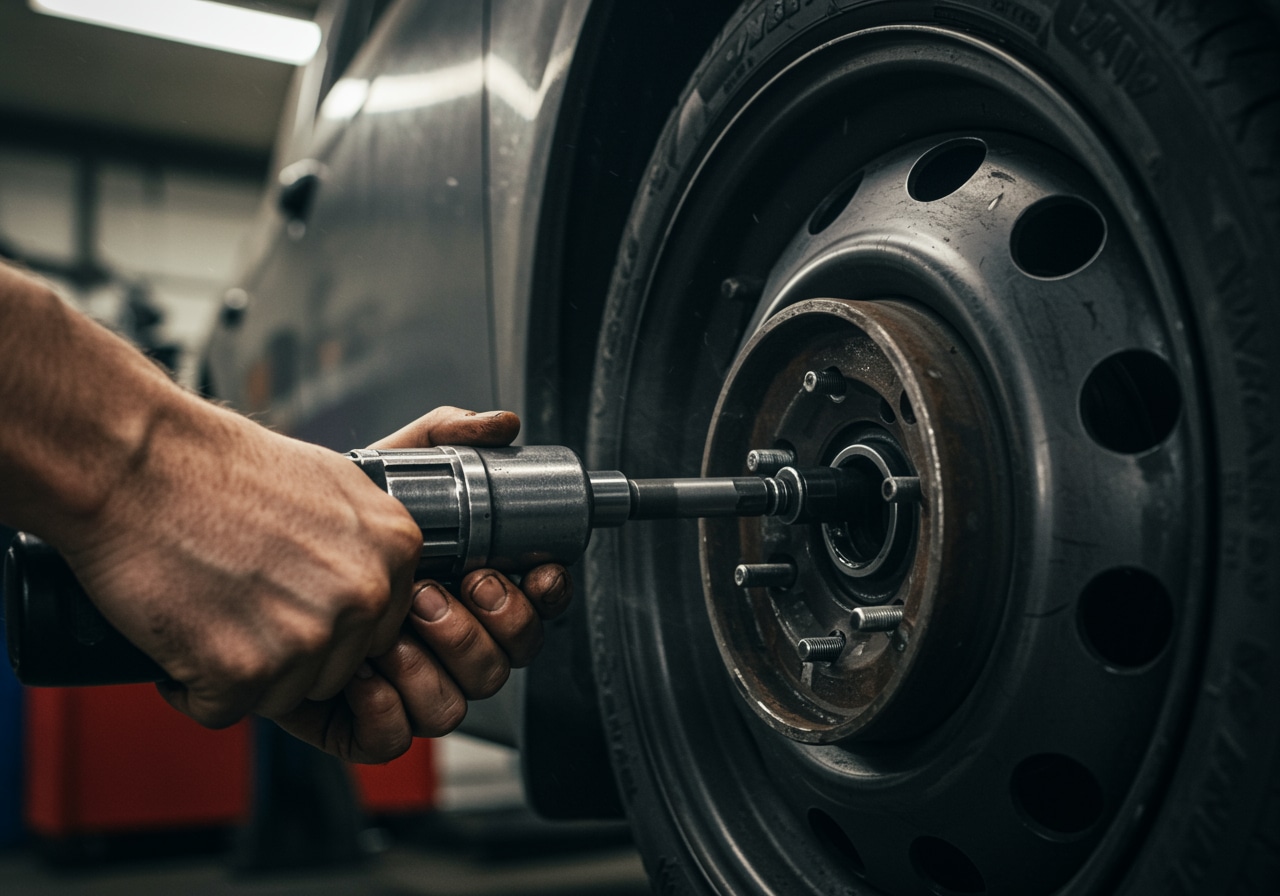
Professional assistance when you need it most.
“In my 15 years of emergency tire service, I’ve seen countless cases of preventable damage from driving on flat tires. The safest distance is zero miles—stop immediately and call for professional help.”
The 6-Step Flat Tire Response
Follow these critical steps when you experience a flat tire to ensure your safety and minimize vehicle damage.
Stay Calm & Signal
Turn on your hazard lights immediately. Grip the steering wheel firmly and avoid sudden braking or steering movements.
Find Safe Location
Gradually slow down and steer to a safe spot—ideally a parking lot, wide shoulder, or level surface away from traffic.
Stop Completely
Once in a safe location, stop the vehicle completely. Do not attempt to drive any further on the flat tire.
Assess the Situation
If safe to exit, inspect the tire. Check if you have a spare and the tools needed. Evaluate traffic and weather conditions.
Call for Assistance
Contact professional roadside assistance. Race Track Auto Center offers 24/7 emergency service at (713) 575-7387.
Stay Safe While Waiting
Remain in your vehicle with seatbelt on if traffic is heavy. If safe, stand well away from the roadway.
Consequences of Driving on a Flat
Understanding the severe consequences of driving on a flat tire helps reinforce why stopping immediately is always the right choice.
Wheel Rim Damage ($500-$2,000+)
Metal rims grinding against pavement cause irreparable damage within 100 yards of driving.
Brake System Damage ($800-$3,000)
Driving flat causes brake components to overheat and fail, creating dangerous stopping conditions.
Suspension Damage ($1,000-$4,000)
The vehicle’s suspension absorbs abnormal stress, leading to premature failure of expensive components.
Loss of Vehicle Control
A flat tire drastically reduces steering ability and braking effectiveness, risking serious accidents.
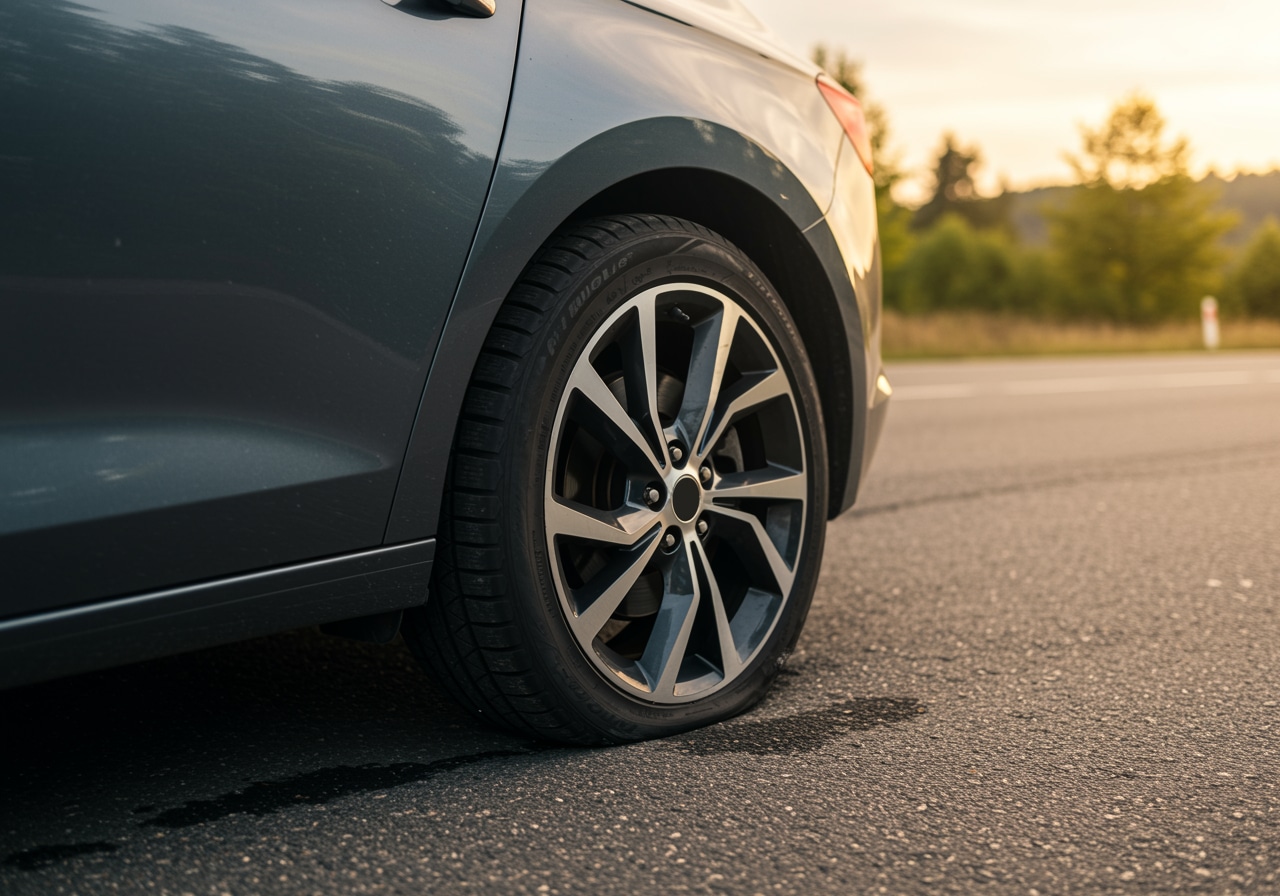
Potential Damage Cost
Why Houston Makes Flat Tires Worse
Extreme Heat
Houston’s summer temperatures exceed 100°F, causing pavement to reach 150°F+. Hot roads accelerate tire damage and increase blowout risk.
Heavy Traffic
Houston’s congested highways make finding safe stopping spots challenging. I-610, I-45, and US-59 present unique emergency hazards.
Construction Debris
Ongoing road construction leaves nails, screws, and debris on Houston roads—leading causes of tire punctures and flats.
Flooding Hazards
Houston’s frequent flooding hides potholes and road damage that can cause sudden tire failures without warning.
Our technicians understand Houston’s unique driving challenges and provide expert emergency tire guidance.
Tire Types & Safe Distances
Understanding your tire type determines how you should respond to a flat tire emergency.
Standard Tires (Flat)
- remove 0 miles safe distance
- remove Immediate rim damage
- remove Rapid brake wear
- remove Loss of control risk
- remove Fire hazard potential
- remove Requires immediate stop
Run-Flat Tires
- check Up to 50 miles emergency
- check 50 mph maximum speed
- check Reinforced sidewalls
- check Maintained control
- check Time to find service
- check Still requires inspection
What Houston Drivers Say
“Got a flat on I-610 during rush hour. Race Track’s emergency team was there in 25 minutes. They saved me from making the mistake of trying to drive to a shop. Professional and fast!”
“I didn’t know driving on a flat could cause so much damage. Race Track’s technician explained everything and got me back on the road safely. Their honesty saved me thousands.”
“24/7 service that actually answers! Had a blowout at 11 PM and they had someone to me within 30 minutes. Can’t recommend Race Track enough for emergency tire situations.”
Emergency Service Throughout Houston
Our mobile emergency team responds quickly throughout the greater Houston metropolitan area.
Westchase
Bellaire
Galleria
Memorial
Meyerland
Sharpstown
River Oaks
West University
Midtown
Heights
Sugar Land
Katy
Flat Tire Emergency?
Don’t drive on it. Call us now for immediate professional assistance.
Safe Driving Distances by Tire Type
| Tire Type | Safe Distance | Max Speed | Action Required |
|---|---|---|---|
| Completely Flat (Standard) | 0 miles | 0 mph | Stop immediately, call for help |
| Run-Flat Tire | Up to 50 miles | 50 mph max | Proceed to nearest service |
| Spare/Donut Tire | 50-70 miles | 50 mph max | Replace as soon as possible |
| Low Pressure (Not Flat) | To nearest station | 35 mph max | Inflate immediately, inspect |
0 miles
0 mph
Stop immediately
Up to 50 miles
50 mph max
Proceed to service
50-70 miles
50 mph max
Replace ASAP
Common Questions
Answers to frequent flat tire emergency questions.
How far can you drive on a flat tire safely?
expand_more
What damage occurs from driving on a flat tire?
expand_more
Can I drive on a run-flat tire when it’s flat?
expand_more
How long can I drive on a spare tire?
expand_more
What should I do when I get a flat tire on the highway?
expand_more
Do you offer 24/7 flat tire emergency service?
expand_more
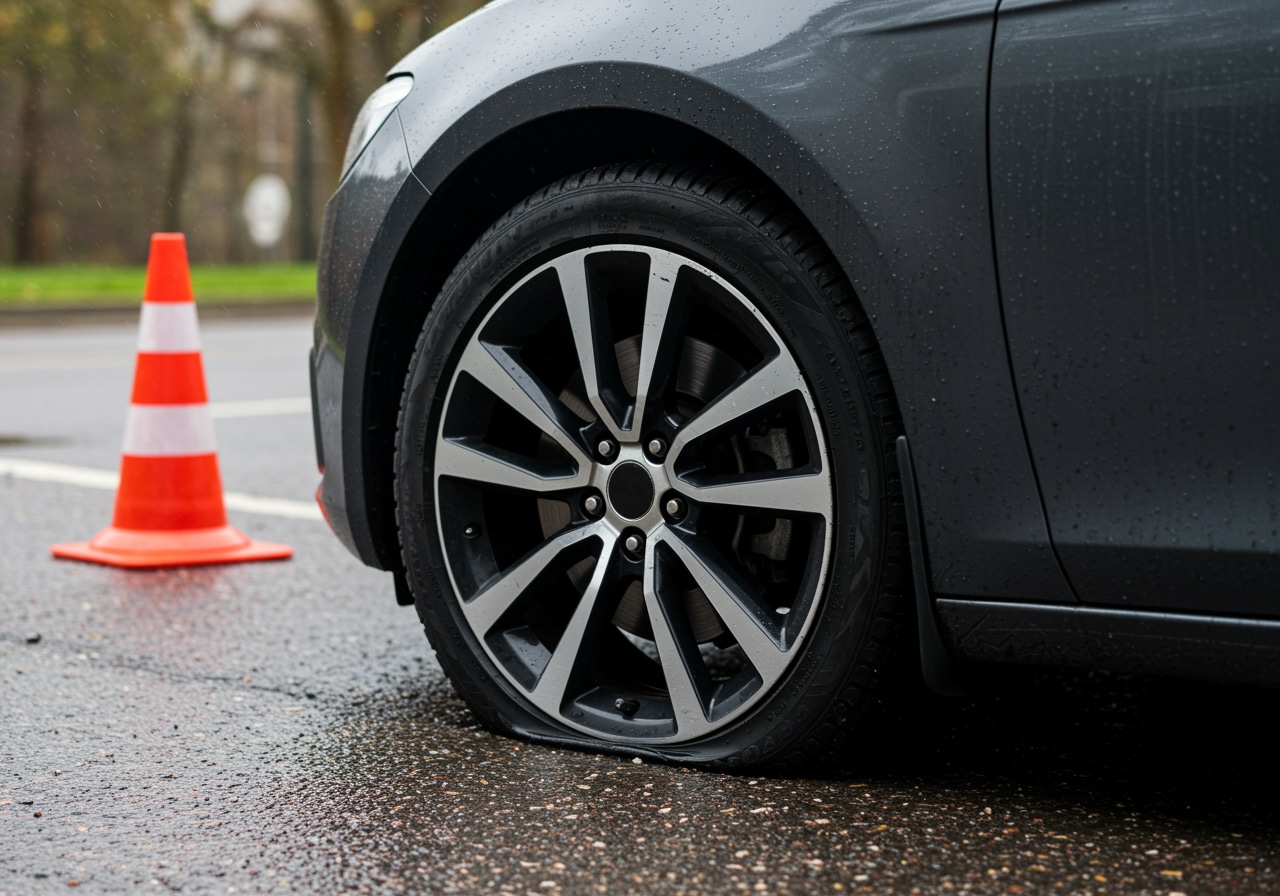
Where to Find Us
Flat tire emergency? Don’t risk driving on it. Our ASE-certified technicians provide 24/7 emergency tire service throughout Houston.